
Step 1: Registration and Setup
- Sign-up to app.bvcircuits.com.
- Make sure you have KiCad installed on your computer.
Step 2: Project Details
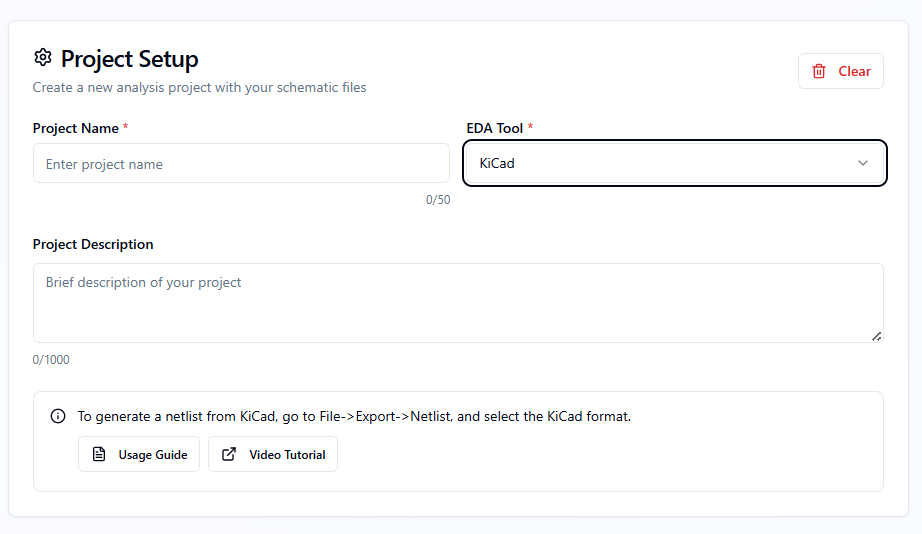
- Enter the project name and a short project description. It is useful to add to the description important things that describe your schematic and will help the AI engine in the analysis. For example, details on the input/output interface, voltages and currents, the application of the PCB, etc. The better the project description, the more accurate the AI analysis becomes.
- Select the EDA software that was used to create the schematic – in this case, KiCad.
Step 3: Export Netlist & Schematics PDF
Open your schematic in KiCad and:
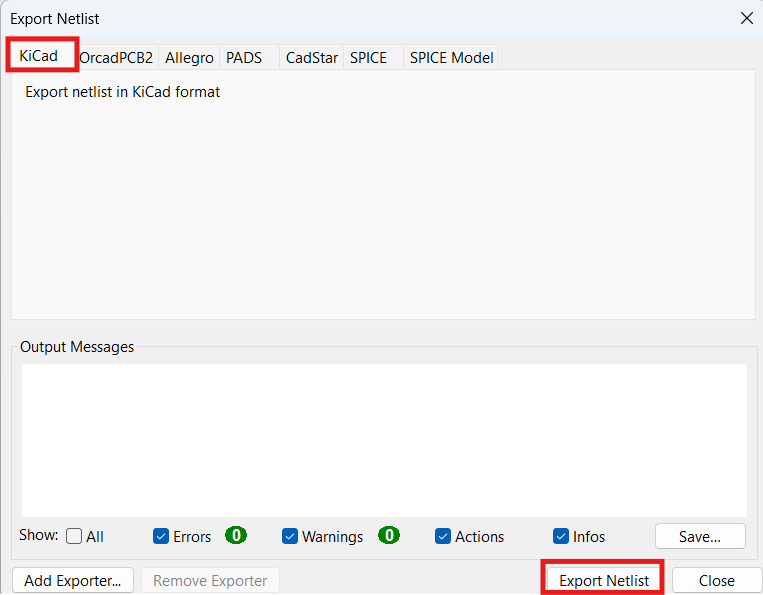
- Go to File → Export → Netlist → Select the KiCad format tab → Export Netlist.
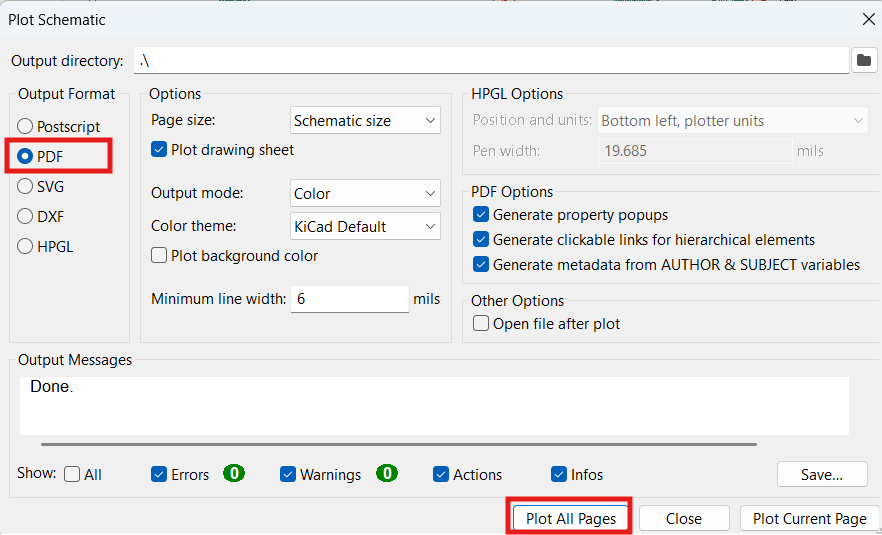
- Go to File → Plot → Select PDF format → Plot All Pages. Use white or light-color background.
- Keep both files ready for uploading.
Step 4: Export BOM in CSV format
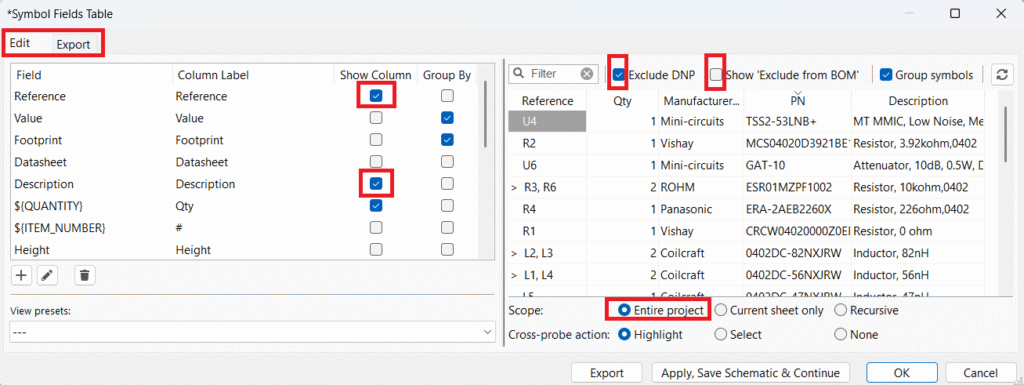
Make sure to export a BOM that contains manufacturer part numbers and manufacturer names. Description fields are also highly recommended. Do not include non-populated components in the BOM:
- In your schematic in KiCad, Go to Tools → Generate Bill of Materials
- On the “Edit” tab and make sure to select “Exclude DNP” and deselect “Show ‘Exclude from BOM'” on the right half of the dialog. On the left side select “Show Column” for at least the reference, description, manufacturer name and manufacturer part number.
- On the Export tab select “csv” format and click the Export button.
Step 5: Upload the Files
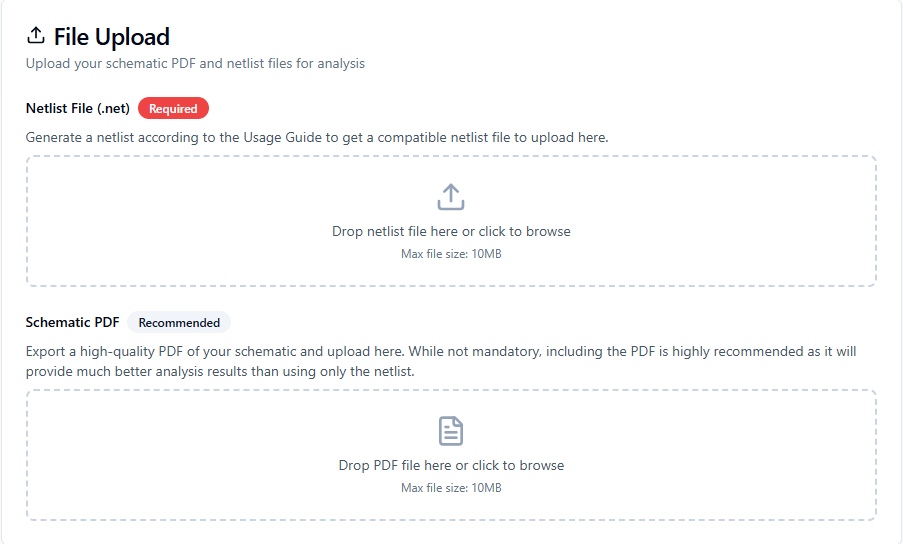
- Drag and drop or browse and upload the Netlist and PDF files you created in the previous step.
- Start the analysis. You will receive an email notification once the process is complete. The analysis typically takes between 5 to 30 minutes.
Step 6: Results and Recommendations
- Once the analysis is complete, a full report will be generated, including all findings as well as a short AI-generated summary. Typical results include: connectivity issues, logical pitfalls, component insights, best-practice suggestions, reliability and other design issues.
- You can download the report in PDF format.
In addition, every analysis is automatically saved to your personal Dashboard for future access.
You’re now ready to let AI help you design smarter, faster, and with fewer mistakes!